

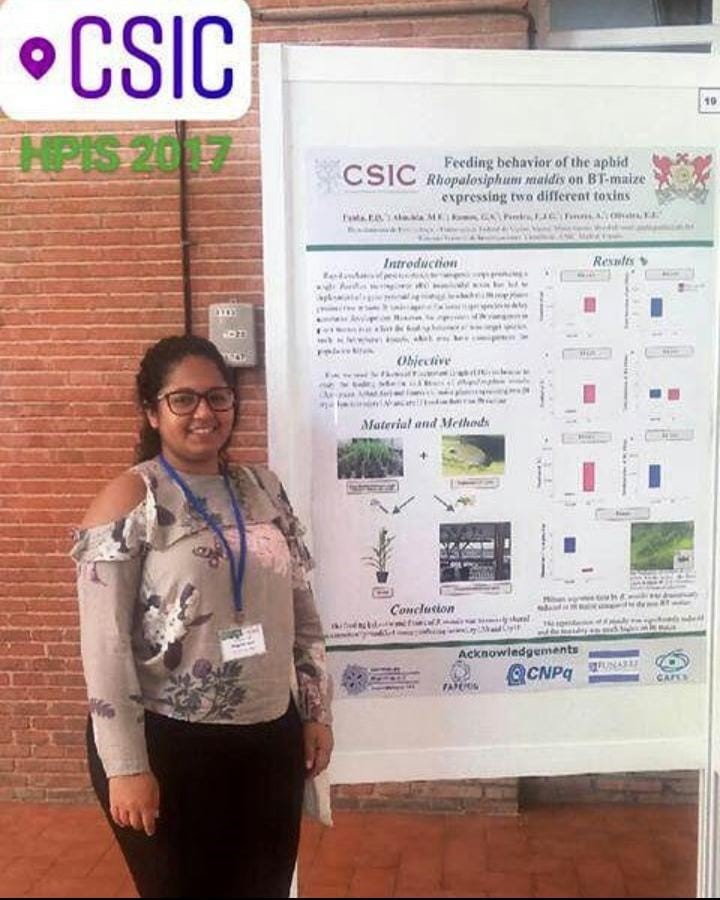
The BraIN & Phy team is proud of another published work, now by the PhD in Entomology Paula Daiana de Paulo, who carried out the work during her sandwich doctorate at the Institute of Agricultural Sciences (ICA-CSIC), Madrid, Spain.
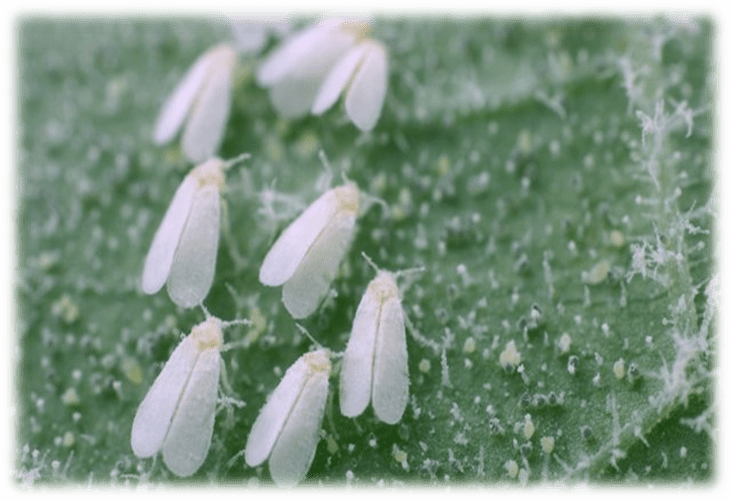
The cultivation of Bt soybeans and the insect pest Bemisia tabaci (MEAM1) are of great economic relevance in the world. In this work the authors used the importance and complexity of insect-plant interactions, under factors associated with climate changes, to better understand their consequences on the environment and develop new management strategies.
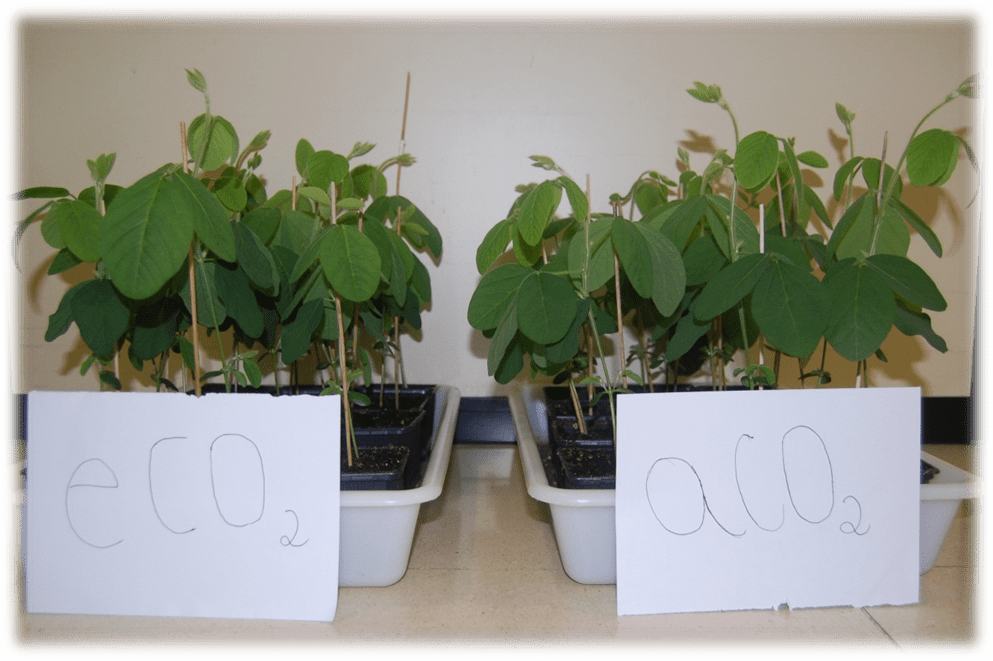
The high CO2 has the consequence of increasing the plant’s metabolism, which can alter the nutritional quality of the plant and thus influence the development of herbivorous insects that feed on it. Understanding how insect pests respond to increased CO2 is essential to predict the pest’s impact on food security.
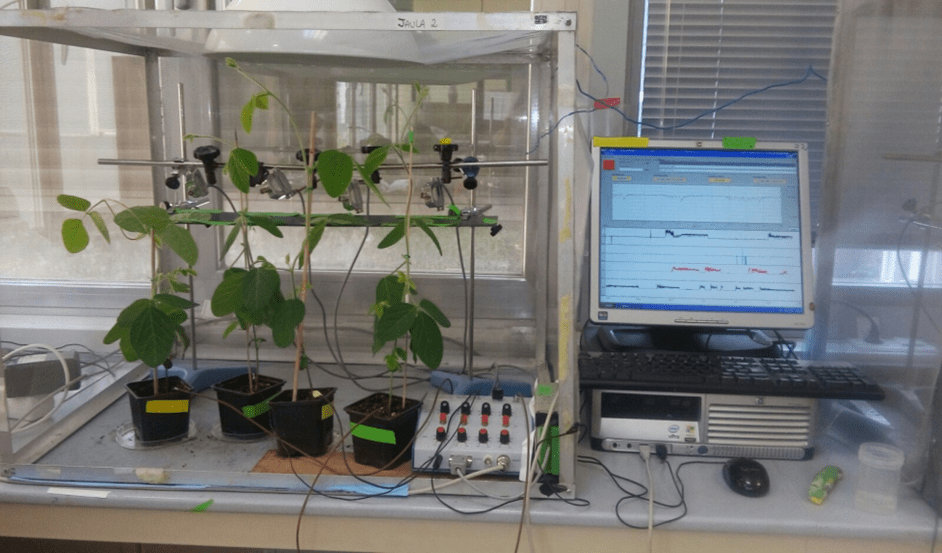
The work focused on investigating the effects of high CO2 [eCO2] on the morphology and biochemistry of a BT soybean crop, analyzing the indirect effects on the life history and eating behavior of Bemisia tabaci. The results found by the authors contribute to the development of strategies in the integrated management of sucking insects in future scenarios.
The study, published in the Journal of Applied of Entomology, had the participation of national and international researches, doctoral student Paula de Paulo together with UFV professor and researchers Eliseu Pereira and Eugênio Oliveira, and researchers Alberto Fereres and Elisa Garzo from the Departament of Crop Protection (ICA) in Spain.
For Paula “The feeling is the best possible, of extreme satisfaction for having developed an excellent work with researchers who are among the main names in the area of feeding behavior of sucking insects. I am also very proud of all the challenges that have been overcome, and of gratitude for all the learning I was able to acquire in Spain”.
You can access the full article by clicking here.




 BraIN&Phy Lab