
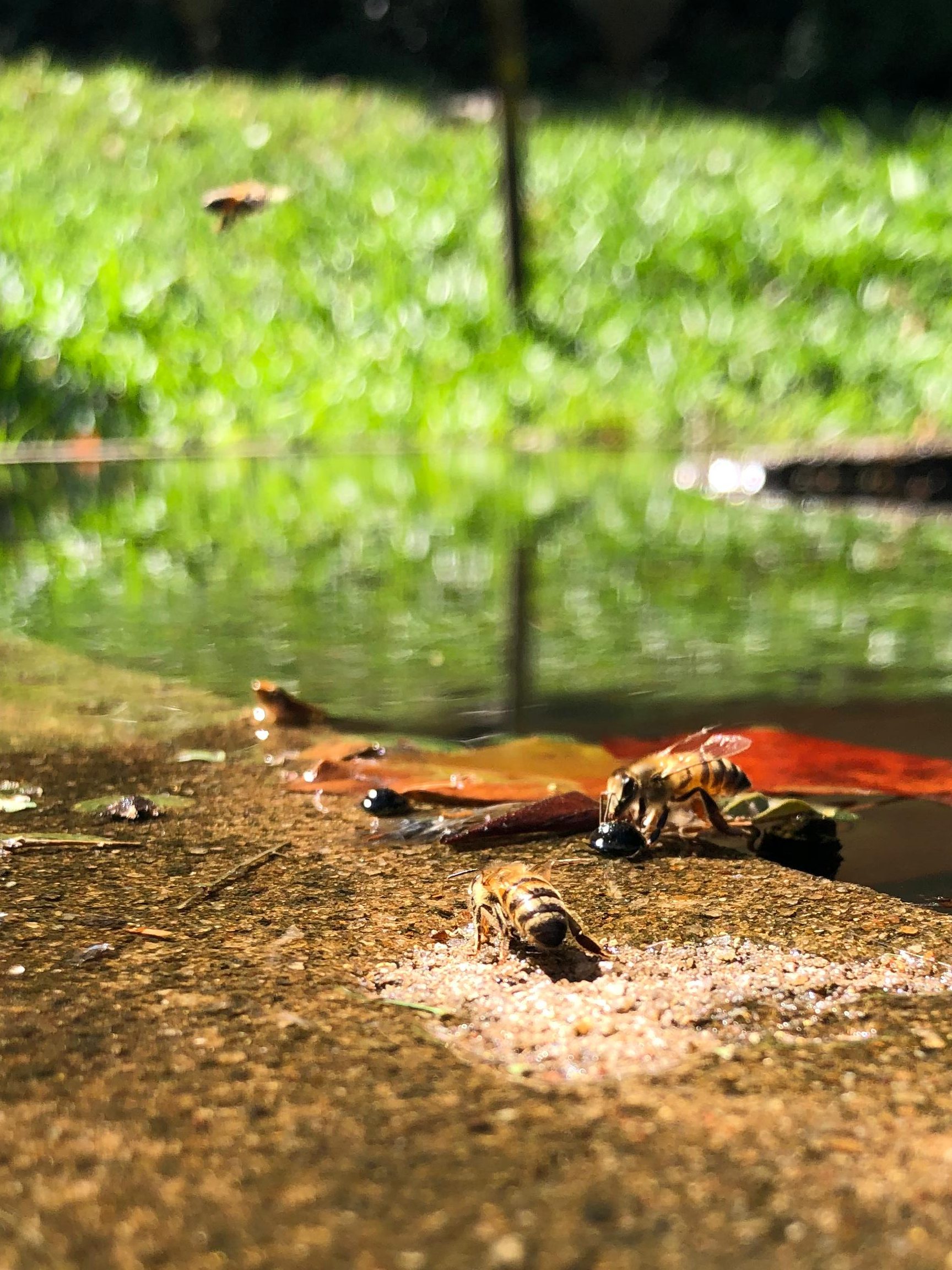
Welcome to the forefront of Neotropical pollinators research at the Brazilian Invertebrate Neurobiology and Physiology Laboratory. Here, our team is committed to unraveling the complexities of environmental stressors impacting these vital species. Check some of our research topics:
Agricultural impact on Neotropical pollinators:
- Understanding how agricultural practices influence Neotropical pollinators, such as Apis mellifera and Partamona helleri;
- Exploring strategies for pollinator-friendly agriculture to promote biodiversity and ecosystem health while sustaining crop yields;
- Investigating the impact of potential selective molecules on pollinators, aiming to contribute to environmentally conscious agricultural practices.
Hive pests and pathogens:
- Mitigating and controling pests like Varroa destructor, Galleria mellonella and Achroia grisella;
- Developing integrated pest management strategies based on a deep understanding of the interactions between pollinators, pests and pathogens.
Environmental stressors influence on Neotropical pollinators:
- Examining the effects of pollutants, including toxic gases, microplastics, and heavy metals, on Neotropical pollinators.
- Shedding light on how these pollutants affect behavior, physiology, and overall health.
Electromagnetic fields and Neotropical pollinators:
- Investigating the impact of electromagnetic fields in our interconnected world on Neotropical pollinators.
- Unraveling potential consequences on navigation, communication, and overall fitness.
Lethal and sublethal effects of environmental stressors:
- Delving into both lethal and sublethal effects of environmental stressors.
- Placing particular emphasis on understanding subtle, long-term consequences in a dynamic environment.
- Utilizing image processing techniques at the hive level to discern sublethal effects and provide insights into adaptive strategies, primarily focusing on A. mellifera.
Collectively, our work not only enhances our understanding of their physiology but also contributes to the development of sustainable practices that ensure a harmonious coexistence between pollinators and their environment.
 BraIN&Phy Lab